

How Should a Suit Fit: The Bespoke View
Fit is what makes a suit look made for you rather than merely your size. How a suit should fit comes down to proportion between measurements: back length, shoulder slope and arm length. This guide will look at each element in turn, from the jacket to the trousers.
Why fit matters more than size
The size number on your suit measures one thing: the width of your chest. The fit of a bespoke suit depends on several more: back length, shoulder slope, waist suppression, all read against your posture. A bespoke tailor takes each of these from you directly, at the fitting, rather than working from a block built for an average body. Most people’s proportions differ from a standard pattern in more than one respect, and a bespoke fitting accounts for all of them together.
How should a suit jacket fit
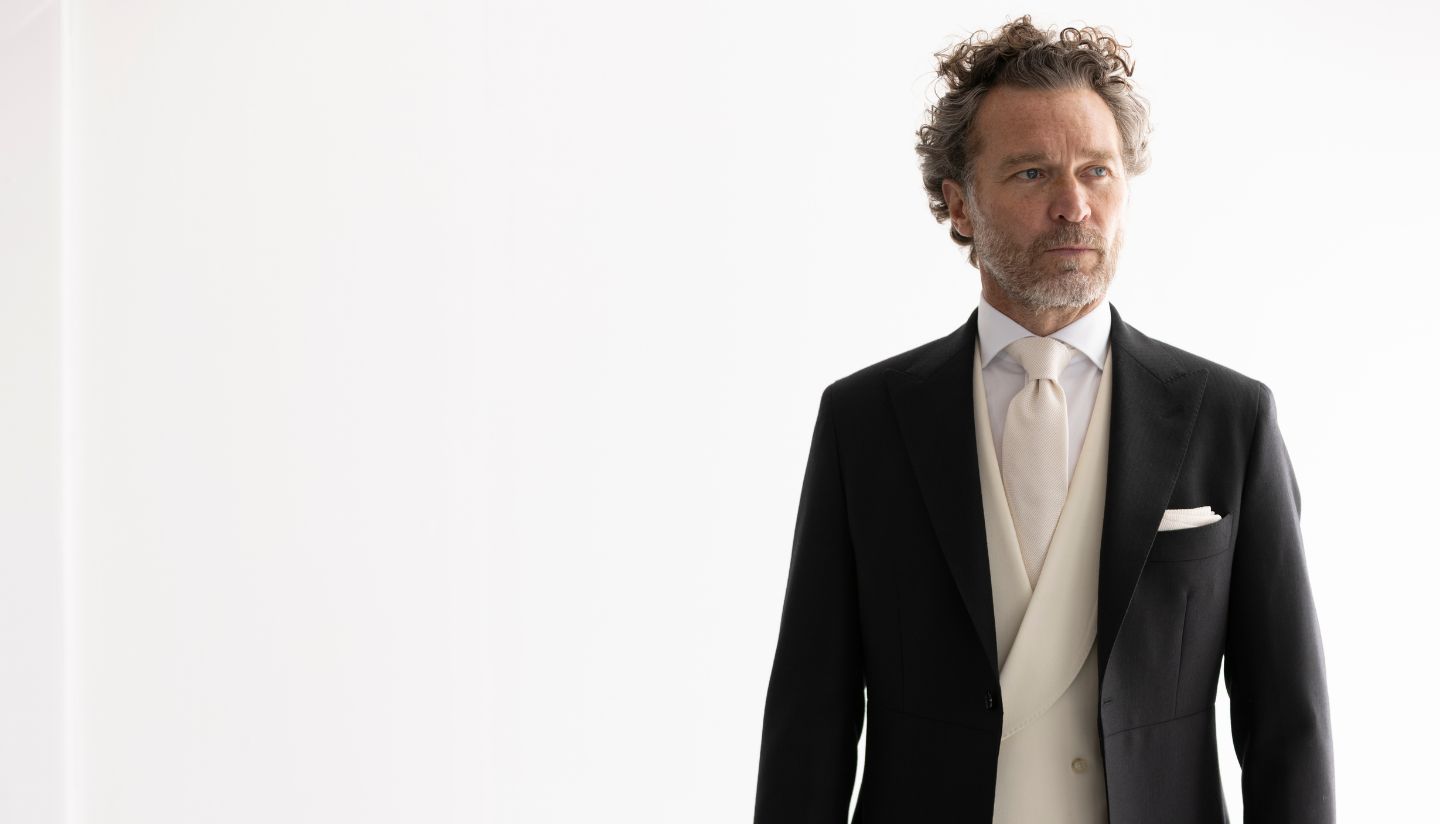
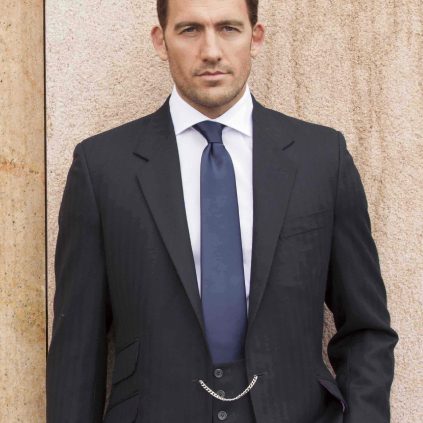
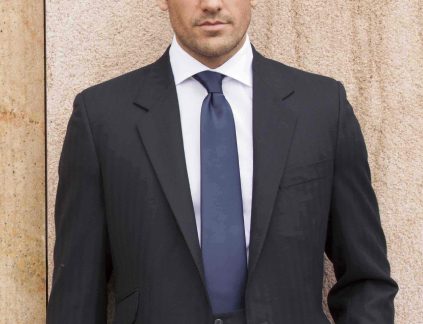
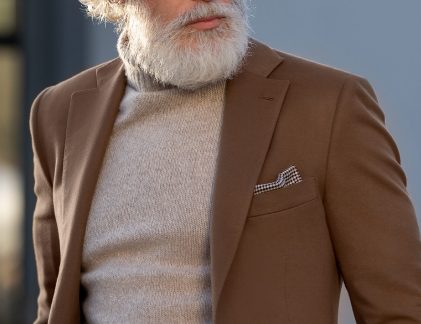
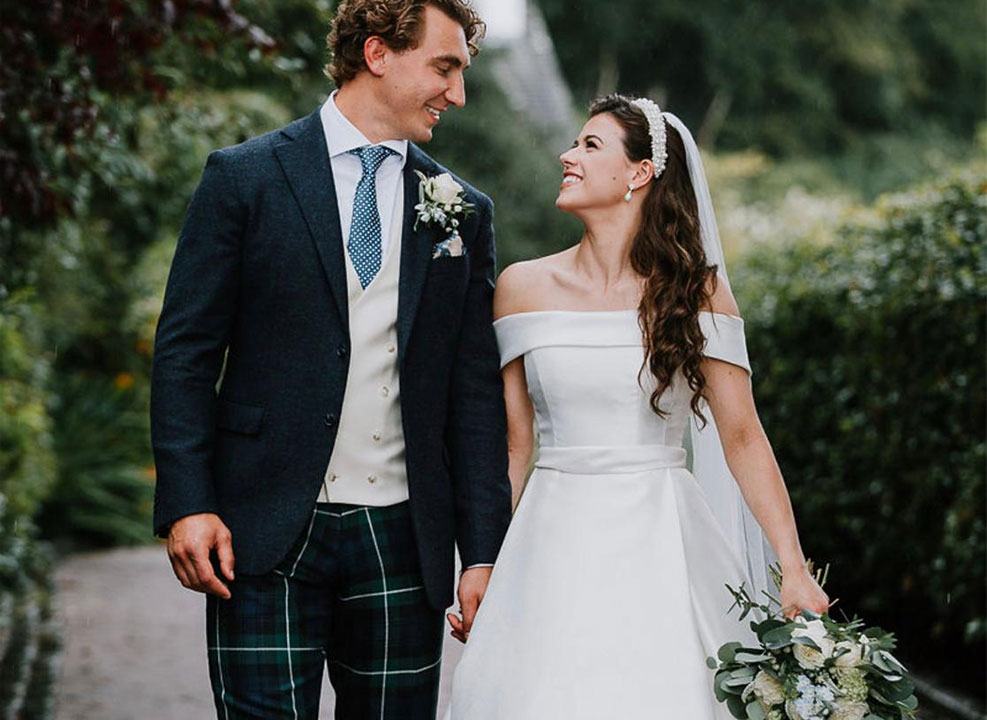
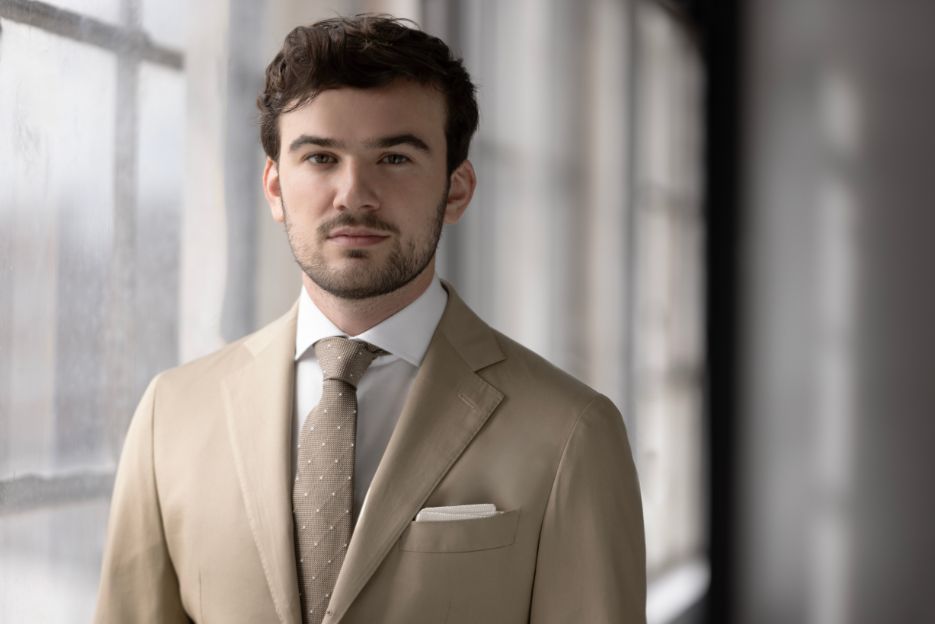
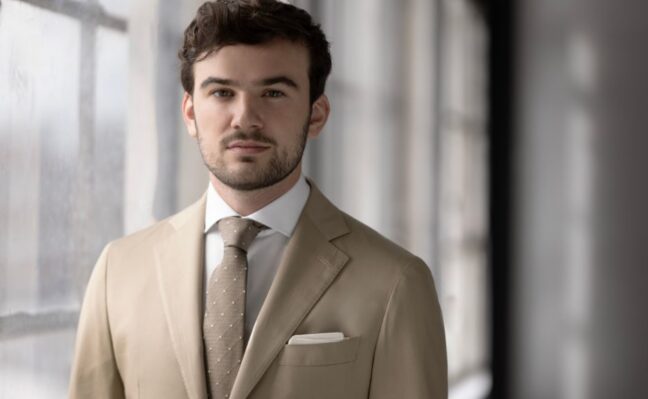
A well-fitted suit jacket closes cleanly at the button, without straining across it. The collar sits flush against your shirt at the back of the neck, the shoulder line runs unbroken, and a quarter to half an inch of shirt cuff shows at your wrist.
Shoulders and collar
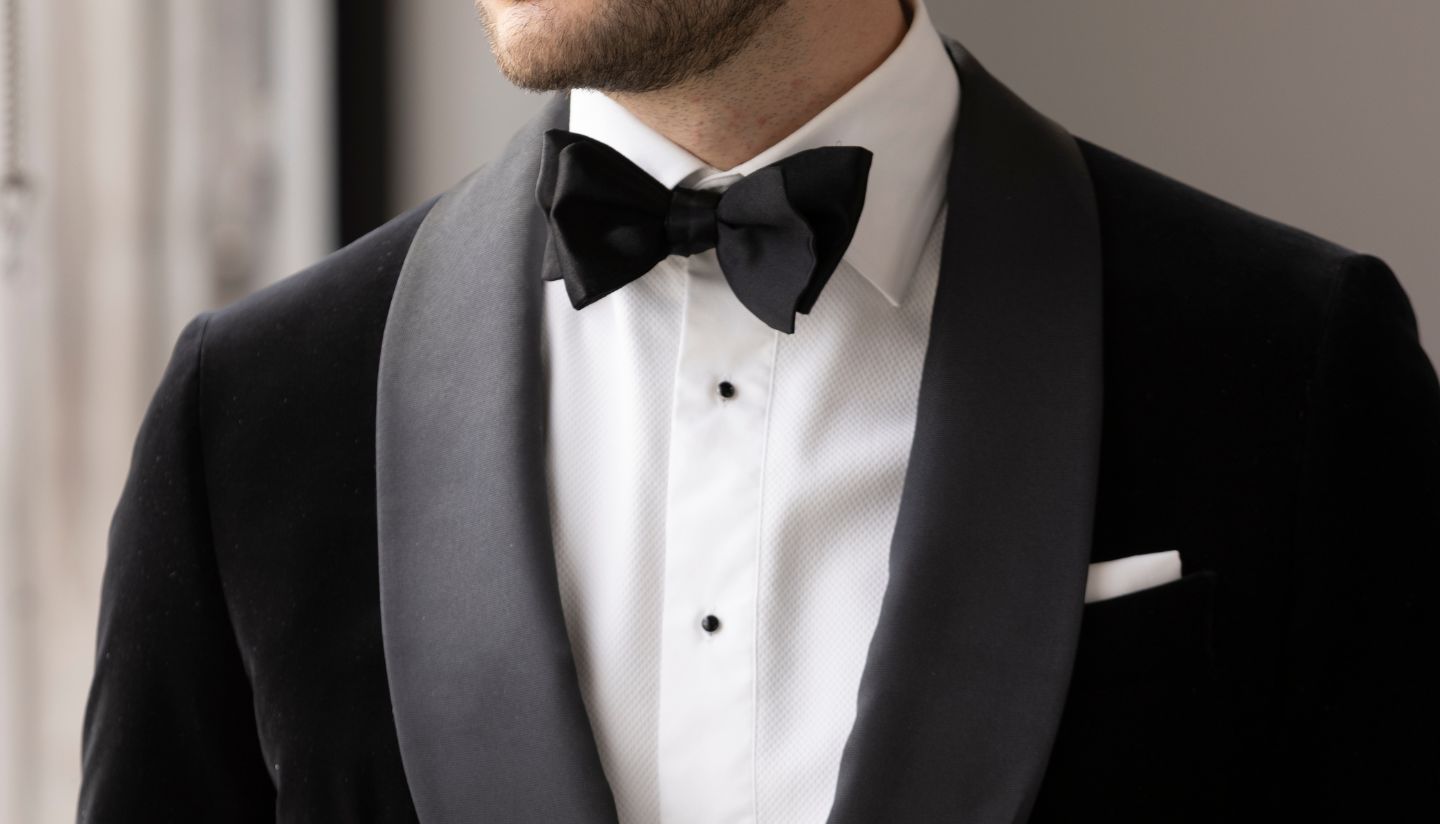
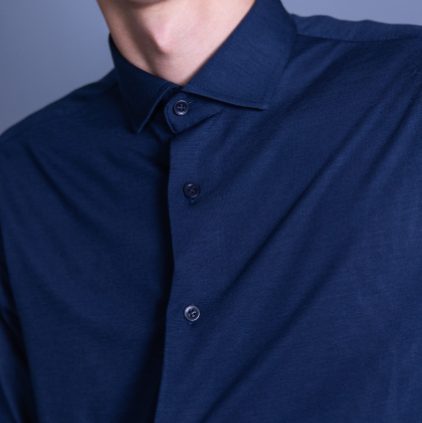
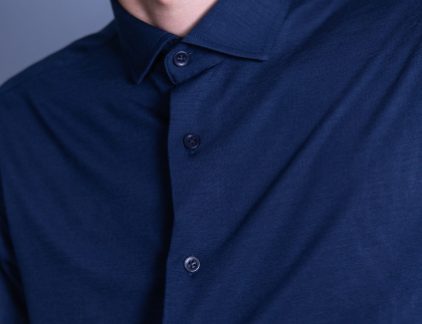
Correct shoulder slope is taken with you standing naturally, arms loose, since most people square their shoulders slightly when they know they’re being measured. Done correctly, the seam sits precisely on the edge of your shoulder, with no dip at the back and no cloth extending past the point of the bone. The collar sits flush against your shirt, without a gap and without riding up.
A flush collar depends on the jacket’s back length matching how you actually carry yourself. A more upright stance and a slight forward curve through the upper back need different balances throughout the jacket, and the collar is where that balance shows first.
A chest or waist that is slightly off can, if required, be adjusted later. Unfortunately, a shoulder cut for the wrong slope can’t be corrected afterwards, since it would mean reworking the construction underneath rather than simply adjusting a seam. That’s why a bespoke tailor has to get the shoulder measurement right from the start.
Chest and waist
Waist suppression is the amount of cloth removed between chest and waist to follow your body’s own taper. How much cloth is removed differs between a man with a fuller waist and one with a straighter build, even at the identical chest measurement. With the right suppression, the jacket closes without pulling at the button and sits without strain across the front.
A suit that fits close should still let you move freely. You should be able to reach forward, sit down or turn to shake someone’s hand without feeling anything pull.
Suit jacket length
Correct suit jacket length depends on your proportions: the jacket needs to be balanced against your torso, leg length and posture rather than determined by height or chest size alone. Correct suit jacket length covers the seat without extending well beyond it: long enough to look finished, short enough to avoid resembling an overcoat.
Two men wearing the identical jacket size can need genuinely different jacket lengths for exactly this reason.
Suit sleeve length
The benchmark for suit sleeve length is a quarter to half an inch of shirt cuff showing at your wrist, with the arm hanging naturally. Your arm length is measured against your own height, not against your chest size, so the cuff shows the same amount whether you’re standing or moving. When the sleeve runs long, the cuff covers the hand rather than sitting above it. A sleeve cut to your own arm length sits exactly where it should, allowing the cuff to show naturally as you move.
How should suit trousers fit
The jacket tends to be the main focus when it comes to the fit of a suit, but the trousers deserve equal consideration. Correctly fitted trousers hold at the natural waist without a belt doing the work, hang cleanly through the hip and thigh, and meet the shoe at exactly the break of your preference.
Rise and waist
The rise is the distance from the crotch to the waistband, checked with you standing relaxed, weight settled into a natural stance, since a rise fitted to a braced posture will ride low the moment you relax into it. For most builds that point sits at the natural waist, and a waistband cut correctly holds its own weight without a belt.
Torso length decides where that point falls, but it is also a matter of habit. Some men wear their trousers higher than the natural waist out of preference, others lower, and a good fitting works to whichever position feels natural. What matters is that the waistband is cut to that point on your body.
A rise cut precisely to where the trousers naturally sit holds its position through a full day, lies flat at the front and pulls cleanly through the seat.
The trouser break
There are three options for where a trouser hem meets your shoe: no break, where the hem clears the shoe entirely and the crease runs unbroken to the floor; a slight break, where the cloth just touches the shoe and creates the smallest fold; and a full break, where the trousers rest further down the shoe and fold visibly at the ankle.
A slight trouser break is the right call for most bespoke commissions. It holds a clean line whether you’re standing or seated, and it won’t bunch or ride up through a long day.
The bespoke view
Fit is a matter of proportion, not size. Every point covered here, from the shoulder line to the trouser break, starts at the consultation and measuring stage where the groundwork is laid for a well-fitting bespoke suit. For more on how that process differs from buying off the rack, our guide to bespoke vs off the rack covers the difference in full.
To book a fitting, contact us on +44(0)131 210 0314 or email mel@andrew-brookes.com, or browse our bespoke tailored suits collection.